
Tooth Extractions

When Should A Tooth Be Extracted?
Pain symptoms are usually the main thing that compels patients to seek dental care. But how do you tell if a tooth extraction can be a viable option? Or how can you know if the pain you’re feeling will go away on its own? Or if your tooth pain is something more serious? These questions can be difficult to answer without visiting a professional.
Some definitive signs our Anaheim dentist will look for include:
- Impaction and Overcrowding: Sometimes your teeth will grow in the wrong direction. This can lead to impaction on neighboring teeth, resulting in pain. A tooth extraction will relieve this overcrowding. This commonly occurs with wisdom teeth.
- Physical Damage: Teeth that have signs of physical trauma or decay. Severely broken and damaged teeth will require one.
- Infection: Severe infections that aren’t treatable with a root canal. This procedure is warranted to prevent the further spread of the infection.
What Happens If I Don’t Pull Out My Tooth?
Not having a problem tooth pulled can lead to bigger problems down the road. The safest option is always to at least have your dentist look at the situation. Then you can make a confident decision based on their professional advice.
If there’s an infection, the bones and gums will gradually weaken. This can lead to a range of complications. And it also increases the chances of the infection spreading to other teeth. When this happens, it leads to more pain and discomfort. If you treat the infection early enough, you might be able to save the tooth. But if it spread too far, often the best option is to extract it to save the teeth around it.
If the problem tooth is causing an impaction, teeth alignment issues will worsen. Issues such as bad jaw alignment or pain with biting and chewing. And they can also prove to be a cosmetic concern.
Why Are Wisdom Teeth Extracted?
Wisdom teeth removal is a proactive way to avoid future problems. If your dentist realizes that your jaw isn’t large enough for them, they will likely suggest extraction.
In other cases, wisdom teeth can become impacted. When impacted, they cannot break through the gums due to a lack of space. Impacted wisdom teeth can trap debris in the surrounding tissue, leading to infections and other oral health concerns.
To avoid all this, your wisdom teeth need to come out. The good news is that wisdom tooth removal is a widespread procedure performed all the time. With modern techniques, it has become safer than ever to have a wisdom tooth extracted.
Wisdom Teeth Removal Surgery
Some patients have all their wisdom teeth removed at once, while others might split it into two visits. If your wisdom teeth are not yet impacted, the surgery can be extremely quick.
For the surgery, patients are typically under general anesthesia. However, sometimes you can have the surgery with only local anesthesia, especially if your teeth are not yet impacted. This is another reason to treat wisdom teeth sooner rather than later. That way, you can avoid the added strain on your body of general anesthesia.
Our goal is to provide a comfortable experience for every patient, so speak with Dr. Patel to learn which anesthesia is best for you and your surgery.
Recovery from a Tooth Extraction
First, you’ll need someone to drive you home. Then, expect to take it easy for about 3-4 days after the surgery. Most patients heal quickly from this surgery and can return to school or work within a week.
If your teeth were more severely impacted, the recovery time could be extended. Patients often receive medication to help with the swelling and pain after the surgery.
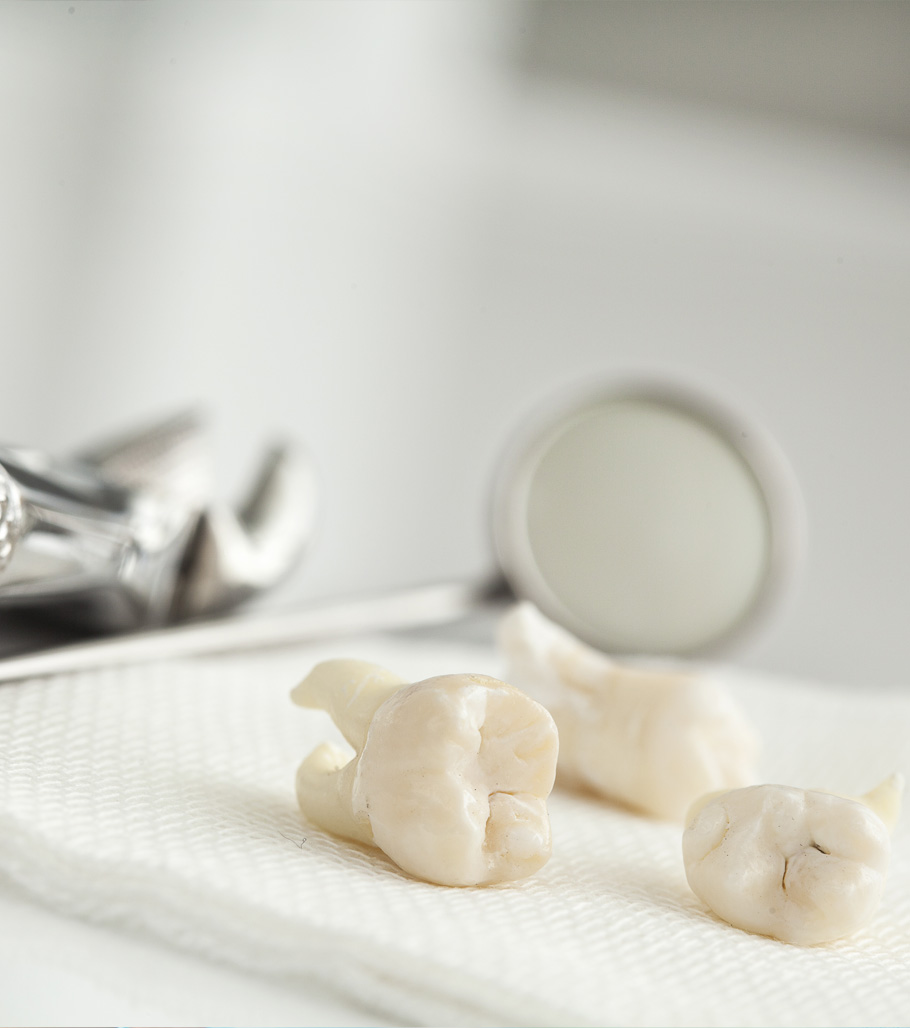
Even once you feel healed, it takes about a month for the incision sites to recover fully. During this time, it is important to follow Dr. Patel’s advice. The area is vulnerable to infection or injury, so it’s essential to take care of it.
We will provide you with complete information on what to expect for your individual recovery. If you have any questions, Dr. Patel and his team will readily answer them for you.
How Painful Is The Procedure?
Having a tooth extraction is actually pain-free. Our dentist always uses some form of anesthetic to deliver a comfortable experience. Also, remember that your damaged tooth is causing the toothache pain to begin with. Removing it essentially removes the pain at its source!
After the procedure, patients do feel sensitivity and discomfort at the site of extraction. This is normal and easily managed with pain medications. But if you have any concerns, do not hesitate to let us know.
Is It Better To Have An Extraction Or Root Canal?
A root canal treatment will always be the preferred choice over a tooth extraction. The reason being is that a root canal will actually save your tooth. However, sometimes this will simply not be an option. If the infection has become too severe, you may need one. It could be the only way to save your remaining teeth around the infected one.
Schedule a Consultation Today
When it comes to wisdom teeth removal or tooth extraction, sooner is often better than later. The longer you wait, the more impacted the teeth can become, which will make the eventual removal more complicated. Schedule an appointment today at My Anaheim Dentist to learn about your options.
Frequently Asked Questions
It is not always necessary to remove wisdom teeth. In fact, many people do not experience any issues with their wisdom teeth and can keep them throughout their lives. Wisdom teeth are recommended to be extracted in the following cases:
- The position of your wisdom teeth prevents them from being cleaned properly, resulting in recurring cavities and infections.
- Your wisdom teeth are severely infected or decayed.
- Your wisdom teeth are impacted (fully hidden underneath the gum) or partially impacted and cause pain and recurring gum irritation.
- You are preparing for an orthodontic treatment and require extra space in the mouth to move crowded teeth.
- Your wisdom teeth erupt after an orthodontic treatment is complete, and are likely to cause new alignment issues.
Tooth extraction costs range from $300 to $ 1,000, depending on the complexity of the case. For example, surgical extractions of impacted teeth cost much more than simple extractions.
A simple tooth extraction procedure can take as few as 10 to 15 minutes from start to finish, with the extraction itself taking only a couple of minutes per tooth. More complex cases and surgical extractions (e.g., impacted wisdom teeth) can take 30 to 90 minutes.
In the majority of cases, recovery after tooth extraction takes 10 to 14 days, with discomfort resolving by days 7 to 10. At the beginning of your recovery, you are likely to experience mild to moderate swelling and soreness at the procedure site. These symptoms can be well managed with over-the-counter painkillers and gradually subside if you follow your dentist’s post-procedure care recommendations.
A simple tooth extraction is performed with forceps on visible and fully erupted teeth. During this procedure, your dentist will remove the tooth from its socket. A surgical tooth extraction is required when the tooth is fully or partially hidden by gum tissue or is broken and cannot be extracted in one piece. In such cases, your dentist will use a scalpel to make incisions in the gum to gain access to the tooth and extract it.
At the beginning of the procedure, your dentist will administer a local anesthetic via injection in the gum. Once the procedure is completely numb, your tooth will be extracted with forceps, a process that takes just a couple of minutes. If your wisdom tooth is fully or partially covered with gum tissue, your dentist will first make incisions in the gum to gain access to the tooth and then extract it. In some cases, your dentist may apply stitches to close the socket and promote healing. At the end of the procedure, you will be given care and recovery recommendations.
Typically, tooth extraction complications can be avoided with proper post-procedure care. For example, infections, one of the risks of tooth extraction, can be prevented by effective oral hygiene, adhering to a soft diet, and abstaining from smoking and alcohol. Another possible complication is dry socket. It occurs if the blood clot that forms in the socket after the surgery is dislodged. To prevent dry socket, do not use straws for drinking, abstain from smoking, be gentle when cleaning at the procedure site, and do not swish water in your mouth.
In the majority of cases, a local anesthesia is used for all types of tooth extraction. Typically, it is sufficient to completely block pain and discomfort during the procedure. However, in complex or lengthy procedures, your doctor might recommend sedation to reduce unnecessary risks.