
Dental Implants
As permanent as we’d hope our teeth to be, life can have other ideas. Tooth decay, injury, and age can all take a toll on your smile. But losing teeth is not as final as it once was. Dental implants are a modern, aesthetically pleasing, and long-lasting solution to replace lost teeth.
At My Dentist Anaheim, we are committed to helping you maintain a healthy smile throughout your life. Dr. Patel’s expert care and experience provide patients with top-of-the-line treatments and procedures.
What Are Dental Implants?
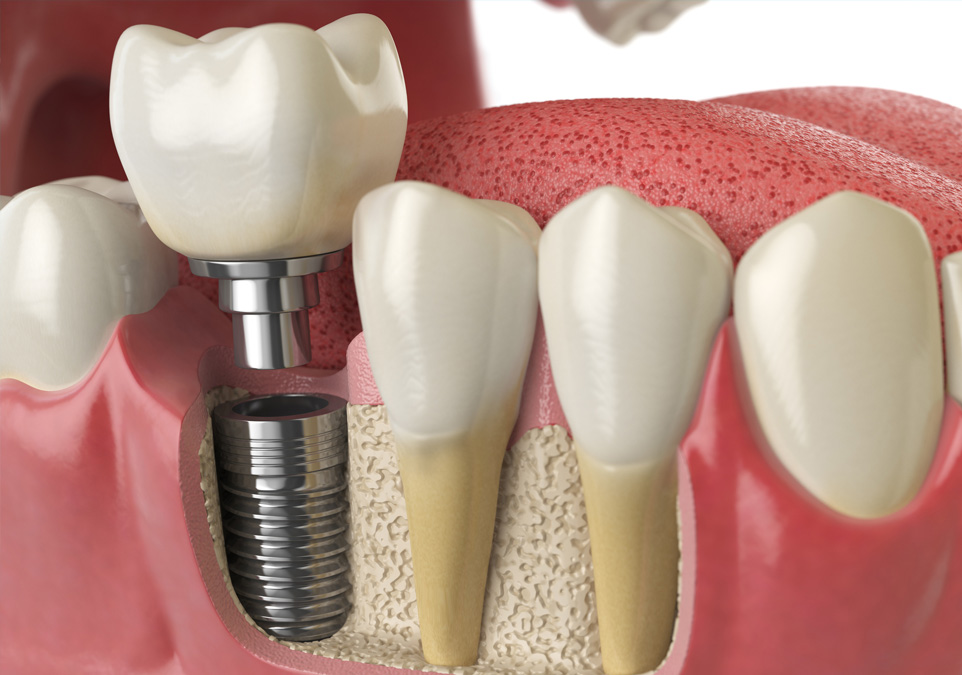
Dental implants are a popular means of replacing lost teeth. What makes them unique is that they are permanent, functional, and cosmetic. On a cosmetic level, they restore your smile. Missing teeth can affect your quality of life both physically and psychologically. Implants serve to fix that and literally fill the tooth-shaped hole in your life. They are comprised of three parts:
- The implant: This post is inserted into the gum line where it will fuse with the jaw bone.
- The abutment: This goes on top of the implant and will be used to affix either the crown or other material.
- The crown: This is the tooth-shaped part that will serve as your new tooth.
Benefits
There are several key benefits for patients who receive dental implants.
Compared to your real teeth, dental implants are the next best thing. They are increasingly popular among patients of all ages because of the many benefits they give.
These include:
- A natural look with a comfortable fit. Implants function and look like your natural teeth.
- Durable and long-lasting reliability. Proper care of implants can ensure a lifetime of use.
- High success rates. Implants have equal, if not higher, success rates than other teeth replacement options.
- Implants can improve face and bone features. It preserves natural tooth tissue and halts bone loss in the jaw due to missing teeth.
The Dental Implants Process
- Consultation: We start by looking at your situation and discussing your oral health. We check for sufficient bone density to support the implant and may recommend bone grafting to bolster your jaw bone.
- Placing the Implant: Next, we surgically insert the implant post into the gum.
- Recovery: From there, you will need a few months to recover. For most patients, this takes about 3 to 6 months for the implant to integrate enough into the bone.
- Taking Impressions: With the implant in its final position, we can take impressions. We send these to our lab so the technicians can create a custom crown that fits in seamlessly with your natural teeth.
- Crown Placement: With the crown ready, we test fit it. If it looks and feels perfect, then we permanently affix it to the abutment.
Does Getting Tooth Implants Hurt?
With modern pain management advances in dentistry, procedures like dental implants are painless. During the implant surgery, your dentist will use a local anesthetic to numb the area of operation. Patients report feeling some pressure sensation during the procedure. After dental implant surgery, it will be common to feel discomfort for a few days. Pain medications can manage any post-surgery pain and discomfort. Your dentist will prescribe this if needed.
Does Insurance Cover Implants?
Insurance plans may include some of the costs of your dental implant. However, this is usually only the case when a tooth has been lost due to an accident or injury. Coverage can vary dramatically, so we recommend checking with your provider to see what your plan covers. We gladly work with patients to help them fully understand their out-of-pocket costs.

FAQ
Implants are useful not only for replacing a single tooth. They can be the first step in rebuilding your entire smile through implant-supported dentures. This alternative is far more convenient and supportive than traditional dentures. Usually, this involves placing four dental implants and using them to support your dentures. The number of implants you will need depends on the type of dentures and your individual health.
Dental implants work best for patients who:
- Have sufficient jaw bone density
- Have overall good oral health
- Have no current oral infections
- Are ready for a multistep process
Even if dental implants are not your ideal path, we provide alternatives that can be perfect for you. These include dental bridges and partial or full dentures.
The entire process can take between 5 and 8 months. The total time will depend on a few factors:
- Patient availability for appointments
- Your natural healing rate
- Need for a bone graft (can prolong the process)
- Number of implants
- Overall oral health
- Any pre-treatment procedures to improve oral health
The sooner, the better. When you are missing teeth, your mouth can become unbalanced. Chewing will, over time, begin to alter your jaw negatively. Eventually, your facial structure can even begin to change. Dental implants help patients restore their jaw functions and maintain stable jaw bone density. If you have had an extraction, you will need to wait for it to fully heal before starting on getting dental implants.
Implants have the potential to last a lifetime. With good oral hygiene habits and being in good general health, expect implants to last 20 years or more. Patients with higher risks of implant failure include those with certain medical conditions, such as diabetes or low bone density.
For such cases, bone grafting might be needed before receiving your implants. During your appointment, Dr. Patel will be able to evaluate if you could be a candidate for implants. He will work with you to put together a plan that is focused on helping you achieve the best possible smile in a way that’s right for you.
Generally, dental implants are considered a superior method of missing teeth replacement compared to dentures and bridges. The main reasons for this include:
- Implants are inserted directly into the jawbone and offer superior stability and biting force.
- Implants stimulate the bone in a way similar to the roots of natural teeth, preventing jawbone resorption (jawbone density loss) and changes in bite, tooth alignment, and facial structure.
However, implants are not suitable for everyone. People who have severe gum disease, autoimmune diseases, uncontrolled diabetes, and other general health issues that hinder regeneration typically can not have a safe dental implant surgery. In these cases, dentures or bridges might be a better option.
Dental implants have three main parts: the implant itself (a screw-like post inserted directly into the jawbone), a dental crown, and an abutment (which connects the crown to the implant). The post and the abutment are typically made of titanium, a very durable and biocompatible metal. The crown can be made of porcelain, zirconia, or porcelain-fused-to-metal, all durable, stain-resistant materials.
The success rate of dental implant procedures is high, reaching 98%, if the procedure is performed responsibly and you are a good candidate for implants. Typically, patients need to have good oral and general health for the procedure and healing process to go smoothly. Gum disease or general health conditions that affect regeneration might prevent the implant from healing properly and cause it to fail.
The recovery process after a dental implant surgery can be roughly divided into two main parts. The initial recovery will take 10 to 14 days or slightly longer in some cases. During this time, you are likely to experience some soreness and swelling, which will gradually subside as the procedure site heals. Once this stage is over, a process called osseointegration begins, meaning that the implant will gradually fuse with your jawbone over the next 4 to 8 months, depending on your general and oral health. When osseointegration is complete, a dental crown will be attached to your implant, and you will be able to use it just like your natural teeth.
To choose the right dental implant specialist, first ensure that they have all the necessary qualifications and credentials. Additionally, look for doctors who are continually learning new methods and further improving their qualifications, and check the reviews of previous clients across multiple platforms. During your consultation, do not hesitate to ask all the questions you have. A good dental surgeon is transparent about the procedure, timelines, probable outcomes and risks, and the costs. Lastly, ensure that you feel welcomed, comfortable, and safe during your visits.